Nitro Type Environmental Advantage 2026: How Screen Setup, Lighting & Focus Boost Racing Speed
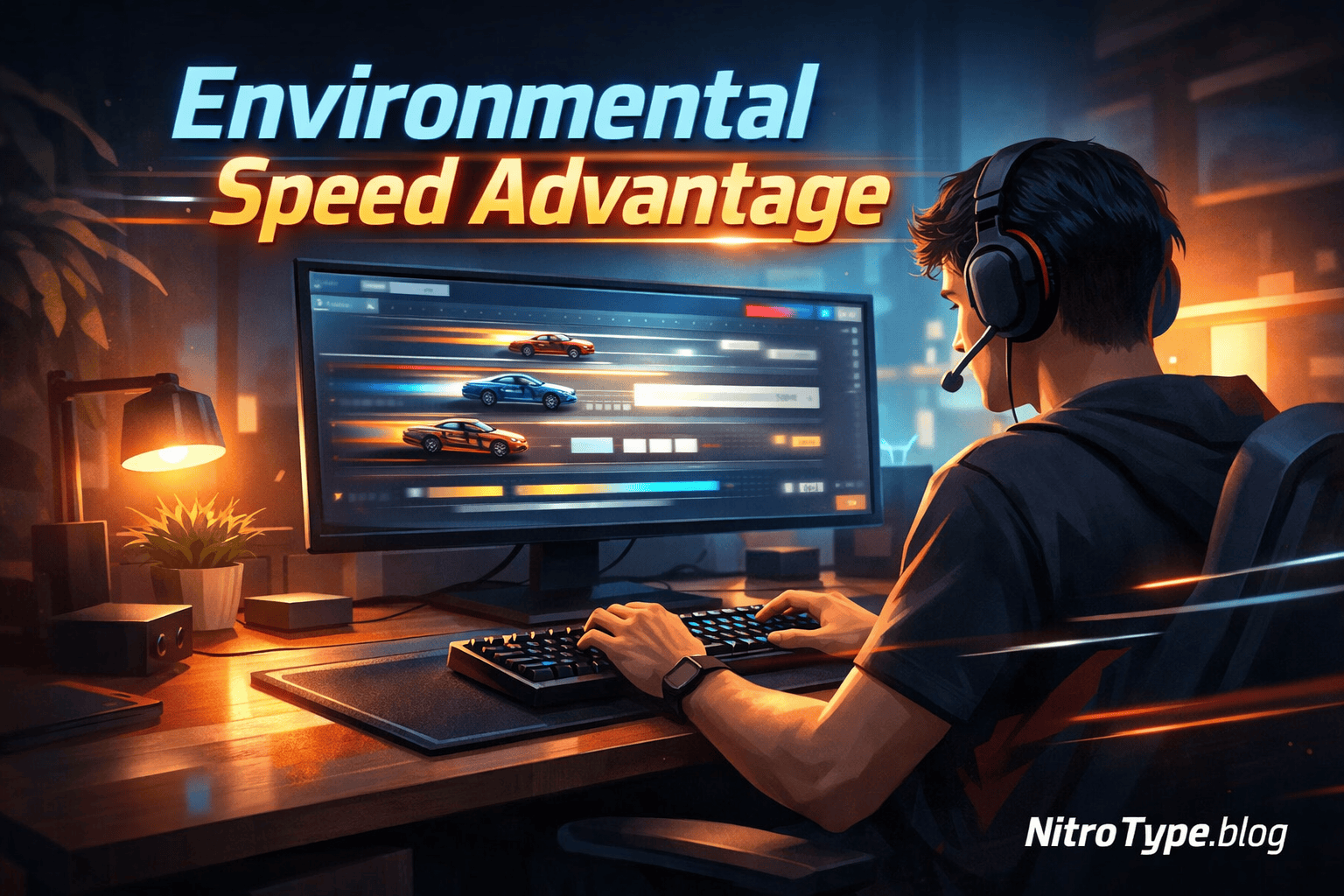
In Nitro Type, most players obsess over typing speed, accuracy drills, and car stats—but elite racers know something others overlook: your environment can quietly decide whether you win or lose. In 2026, as competition grows fiercer and skill gaps narrow, the Nitro Type Environmental Advantage has become one of the most powerful yet underused performance boosters.
This guide dives deep into how screen setup, lighting, posture, and focus engineering directly affect your WPM, accuracy, endurance, and consistency. You’ll get real-world examples, practical setups, expert-level insights, and future trends—so you can turn your racing environment into a competitive weapon.
Table of Contents
What Is the Nitro Type Environmental Advantage and Why Does It Matter in 2026?
Short answer: it’s the performance edge created by optimizing everything around your typing—not just your fingers.
In 2026, most serious Nitro Type racers already practice daily and understand accuracy mechanics. What separates consistent top performers is how well their environment supports speed, comfort, and focus without causing fatigue or distraction.
The Nitro Type Environmental Advantage refers to how screen clarity, lighting balance, posture, and sensory control influence reaction time, word recognition, and sustained performance. Unlike raw typing skill—which improves slowly—environmental upgrades can deliver instant gains.
Screen Setup Optimization — How Display Choices Directly Affect WPM
Does screen setup really matter for typing speed?
Yes—your screen is where every word begins. If your display causes eye strain, delays, or poor visibility, your brain works harder just to read, leaving less capacity for speed and accuracy.
Screen Size, Resolution, and Visual Processing Speed
A screen that’s too small forces constant eye movement. One that’s too large increases scanning distance. For most Nitro Type racers:
- 24–27 inches is the sweet spot on desktop
- 1080p or higher ensures crisp text
- Browser zoom around 100–110% improves word recognition
Clear text allows your brain to predict words faster, which is critical in competitive races.
A well-tuned display works best when paired with low system delay. That’s why many competitive racers also focus on Nitro Type latency optimization to eliminate hidden input lag that breaks typing rhythm.
Refresh Rate, Smoothness, and Rhythm Stability
While Nitro Type doesn’t demand ultra-high refresh rates, smoother visuals still help:
- 60Hz is acceptable
- 120Hz+ reduces visual stutter and micro-distractions
- Stable frame pacing improves rhythm consistency
Even subtle screen smoothness can affect how confidently your brain locks into pace.
Lighting & Eye Comfort — The Silent Performance Multiplier
Can lighting actually affect racing speed?
Absolutely. Lighting controls how long you can stay sharp before fatigue creeps in. Poor lighting doesn’t just hurt comfort—it quietly erodes accuracy and focus.
Ambient Lighting vs Screen Brightness Balance
One of the most common mistakes Nitro Type players make is racing in a dark room with a bright screen. This causes rapid eye fatigue and focus drop.
Best practices:
- Match screen brightness to room lighting
- Avoid glare from windows or overhead bulbs
- Use soft ambient lighting behind or beside your monitor
Improper lighting doesn’t just cause discomfort—it directly impacts performance. Research on lighting ergonomics and eye strain shows that prolonged screen use under poor lighting conditions increases visual fatigue, reducing concentration and endurance—both critical for long Nitro Type sessions.
Blue Light, Night Racing, and Mental Fatigue
Night racers often experience:
- Slower reaction times
- Increased typo frequency
- Faster burnout
Blue-light filters can help, but they’re not magic. The real solution is warm ambient lighting + moderate screen brightness, especially after sunset.
Focus Engineering — Designing an Environment That Keeps You in the Zone
Why do some racers feel “locked in” while others lose focus mid-race?
Because focus is engineered, not accidental. Your surroundings either support deep concentration—or constantly pull you out of it.
Reducing Environmental Distractions
Small distractions add up:
- Phone notifications
- Visual clutter on the desk
- Background noise
Elite racers create a focus bubble—a consistent racing environment where nothing changes except the words on screen.
When distractions are minimized and comfort is optimized, racers are far more likely to enter a sustained performance state similar to the one described in typing flow state in Nitro Type—where speed feels automatic and errors naturally decline.
Posture, Screen Alignment, and Cognitive Load
Screen height matters more than most players realize:
- Top of screen at or slightly below eye level
- Neutral neck position
- Relaxed shoulders
Poor alignment increases mental strain, which subtly slows reaction time even if your fingers are fast.
Environmental Fatigue — How Poor Setup Quietly Slows You Down
Ever notice your speed drop after 30–40 minutes?
That’s environmental fatigue—not a lack of skill.
Finger, Wrist, and Visual Fatigue Connection
Poor lighting, bad posture, and awkward screen angles lead to:
- Micro-mistakes
- Loss of rhythm
- Declining accuracy
Extended racing in poorly optimized environments increases strain on hands and eyes, accelerating symptoms tracked in the Nitro Type Finger Fatigue Index 2026—where endurance, not speed, becomes the real bottleneck.
Fatigue doesn’t arrive suddenly. It sneaks in quietly, shaving off WPM race by race.
Desktop vs Laptop vs Mobile — Which Environment Wins in 2026?
Is one setup objectively better?
Yes—but only if optimized correctly.
- Desktop: Best screen size, posture control, stability
- Laptop: Portable but often causes neck and wrist strain
- Mobile: Fun, but limited for competitive accuracy racing
Desktops dominate competitive play because they allow full environmental control. However, a well-optimized laptop setup can still outperform a poorly arranged desktop.
Common Environmental Mistakes Nitro Type Racers Still Make
Many players unknowingly sabotage their own performance by:
- Racing in dark rooms
- Using overly bright screens
- Sitting too close or too far from the display
- Ignoring early signs of eye or finger fatigue
- Racing marathon sessions without visual breaks
Fixing even one of these can unlock immediate performance gains.
Future of Nitro Type Racing Environments (2026 and Beyond)
Environmental optimization is just getting started. Emerging trends include:
- Adaptive lighting systems
- Eye-strain monitoring tools
- Personalized setup analytics
- Focus-enhancing desk ecosystems
As Nitro Type competition evolves, environmental mastery will become standard training, not an afterthought.
FAQs: Nitro Type Environmental Advantage
Does screen size affect Nitro Type speed?
Yes. Proper screen size improves word recognition and reduces eye movement, boosting consistency.
What lighting is best for long Nitro Type sessions?
Soft ambient lighting that matches screen brightness is ideal, especially for evening races.
Can poor environment reduce accuracy?
Absolutely. Eye strain and posture issues directly increase typo rates.
How often should racers take breaks?
Short visual breaks every 20–30 minutes help maintain peak performance.
Is environment more important than practice?
Not more important—but it multiplies the effectiveness of practice.
Conclusion: Environment Is the Hidden Edge You Control
In 2026, raw typing speed alone is no longer enough. The real competitive advantage lies in how well your environment supports your performance. By optimizing screen setup, lighting, posture, and focus conditions, you reduce fatigue, improve consistency, and unlock speed you already have—but couldn’t access.
The Nitro Type Environmental Advantage isn’t about buying expensive gear. It’s about smart setup, awareness, and intentional design. Fix your environment—and your WPM will follow.

Hi, I’m Kamran Khatri, the author behind NitroType.blog. I share typing speed tips, Nitro Type updates, gaming tricks, and productivity hacks to help you type faster and smarter. My goal is to make typing fun while helping you improve your skills like a pro. If you’re passionate about typing or want to level up your Nitro Type game, you’re in the right place!