Nitro Type Learning Curve Mastery: The Ultimate Guide from 30 WPM to 100+
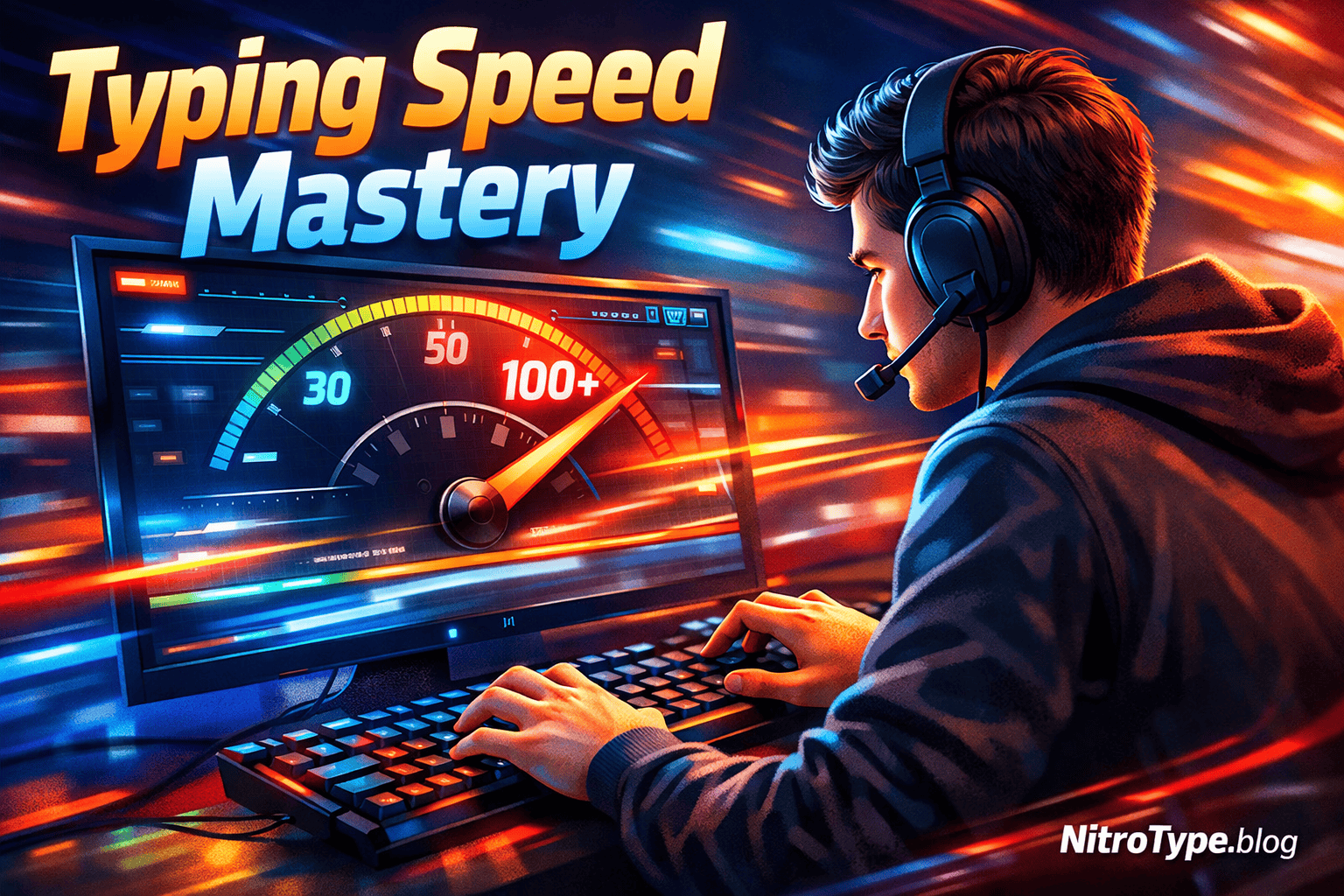
If you feel trapped between 40–60 WPM in Nitro Type while other racers seem to fly ahead effortlessly, you’re definitely not alone. This frustration isn’t caused by luck or lack of ability. The Nitro Type Learning Curve follows a clear pattern of rapid improvement, frustrating plateaus, and sudden breakthroughs. Most players don’t stop improving because they lack talent—they stall because they practice the wrong skills at the wrong stage of their typing journey.
Real improvement in Nitro Type isn’t about grinding races nonstop. It’s about understanding how typing skills evolve, when to prioritize accuracy over speed, and how to structure your practice so progress compounds naturally instead of stalling.
Typing improvement depends on consistent mechanics, posture, and finger placement. Professional typing coaches emphasize that long-term progress comes from mastering fundamentals before chasing speed. Guides on improve typing speed and accuracy explain why small daily habits outperform marathon practice sessions.
In this guide, you’ll learn how beginners realistically move from 30 WPM to 100+ WPM, what causes plateaus, and how to break through each stage using smart, evidence-based training.
Table of Contents
How the Nitro Type Learning Curve Works
What exactly is the Nitro Type Learning Curve?
It’s the predictable pattern of skill growth where beginners improve quickly, intermediates plateau, and advanced racers require deliberate practice to gain speed. Understanding these stages prevents frustration and helps you train smarter instead of just harder.
The learning curve isn’t a straight line. Early gains feel fast and easy. Then progress slows. Finally, improvements become subtle but powerful. This happens because your brain and muscles adapt differently at each phase.
The Three Growth Phases
1) Rapid beginner growth (30–50 WPM)
At this stage, simply learning finger placement and not looking at the keyboard can boost your speed quickly. You’ll see big gains with minimal effort.
2) Intermediate slowdown (50–80 WPM)
Here’s where most players get stuck. Bad habits start limiting growth, and accuracy mistakes begin canceling out speed gains.
3) Advanced optimization phase (80–100+ WPM)
Progress slows again, but for a good reason. You’re now refining micro-skills like rhythm, word prediction, and error recovery.
Why Most Players Plateau
Most Nitro Type players stall because they:
- Chase speed before accuracy
- Reinforce bad habits
- Practice randomly instead of deliberately
- Never isolate weak keys or problem words
Plateaus aren’t a sign you’ve hit your limit. They’re a sign your training method needs to evolve.
Stage 1: From 30 WPM to 50 WPM – Building the Foundation
How do beginners escape the slow-typing zone?
By prioritizing accuracy, posture, and finger discipline instead of raw speed. This stage is about laying a foundation that supports long-term improvement without locking in mistakes.
This is the most important phase of your entire Nitro Type journey. What you build here determines how fast you can go later.
Key Skills to Master at 30–50 WPM
At this level, your only real goal is control. Speed will come naturally.
Focus on:
- Home row positioning
- Keeping your eyes on the screen, not the keyboard
- Typing slowly and cleanly
- Maintaining 95%+ accuracy
- Using all fingers instead of two or three
You don’t need to win races yet. You need to type correctly.
Beginner Practice Routine
A simple daily routine that works:
- 5 minutes: slow warm-up typing
- 10 minutes: accuracy-focused Nitro Type races
- 5 minutes: custom text drills (no rushing)
The goal is to make clean typing automatic.
New players should start with structured fundamentals before grinding races nonstop. A beginner-friendly breakdown of essential habits can be found in these beginner Nitro Type tips, which explain how early technique choices shape long-term speed.
Stage 2: From 50 WPM to 80 WPM – Speed with Control
Why do players feel stuck around 60 WPM?
Because speed growth now depends on precision and rhythm. This stage requires focused accuracy training, smarter drills, and controlled racing rather than chaotic speed bursts.
This is where the Nitro Type Learning Curve becomes mentally challenging. You’re no longer improving just by “playing more.”
The Accuracy-First Rule
Here’s a truth most racers ignore:
Speed comes from accuracy, not the other way around.
Every typo creates hesitation, mental stress, and lost rhythm. If your accuracy drops below 95%, your speed growth will stall.
Focus on:
- Slowing down slightly to eliminate mistakes
- Building consistent word flow
- Maintaining even rhythm instead of sprinting randomly
Precision Drills That Work
The fastest way to break the 60 WPM plateau is deliberate practice.
Effective drills include:
- Slow text copying with zero mistakes
- Error-isolation drills (repeat your weakest keys)
- Sentence repetition drills
- Long-form text races for endurance
Improving speed without precision creates bad habits that slow future growth. Structured accuracy training drills help racers break the 60 WPM plateau by reinforcing clean muscle memory.
Stage 3: From 80 WPM to 100+ WPM – Elite Optimization
How do top racers break into triple-digit WPM?
By refining rhythm, minimizing hesitation, and training micro-skills like word prediction and finger transitions. At this level, progress is slower—but far more powerful.
Once you reach this phase, raw effort stops working. Precision engineering of your typing style becomes everything.
Advanced Speed Mechanics
Elite racers rely on:
- Chunk typing (typing word groups instead of single letters)
- Predictive reading (reading 2–3 words ahead)
- Micro-pause elimination
- Controlled speed bursts
- Smart error recovery
Instead of typing faster, you’re typing smarter.
Elite Training Routines
At 80+ WPM, your routine should include:
- Sprint races (10–20 second max-speed bursts)
- High-difficulty text drills
- Accuracy recovery drills
- Long-session endurance typing
Once you hit advanced levels, random races stop working. Targeted advanced speed training techniques focus on controlled bursts and rhythm optimization for sustainable triple-digit WPM growth.
The Science Behind Typing Progress
Why does improvement slow down at higher speeds?
Because typing relies on procedural memory, which strengthens only through deliberate repetition. Without reinforcement, even fast typists experience speed decay.
Muscle Memory & Procedural Learning
Typing isn’t just mental—it’s neurological. Every correct keystroke strengthens a neural pathway. Every mistake weakens rhythm.
Typing relies on procedural memory—the same system used for playing instruments or sports. Research into procedural skill retention shows that without reinforcement, even well-learned skills degrade over time. Studies on procedural skill decay explain why speed and accuracy drop after periods of reduced practice, even if the skill was once mastered.
That’s why consistency matters more than intensity.
Common Mistakes That Kill Your Progress
Why do so many players fail to improve despite racing daily?
Because they reinforce errors, chase speed too early, and ignore fundamentals. Fixing these mistakes unlocks immediate WPM gains.
Top Growth Killers
- Over-speeding before accuracy is stable
- Ignoring posture and finger placement
- Racing only easy text
- No structured practice routine
- Never reviewing mistakes
- Typing while fatigued or distracted
Fixing even one of these can boost your speed within days.
Realistic Timelines: How Long Each Stage Takes
How fast can you go from 30 to 100 WPM?
It depends on consistency, quality of practice, and accuracy discipline. Most players underestimate how fast smart training compounds.
Average Progress Benchmarks
With proper training:
- 30 → 50 WPM: 2–4 weeks
- 50 → 80 WPM: 1–3 months
- 80 → 100+ WPM: 3–6 months
With random racing:
- Often years with little progress
The difference isn’t talent—it’s structure.
Future Trends: How the Nitro Type Learning Curve Is Changing
Will typing games get easier to master?
Not exactly. AI-driven feedback, adaptive difficulty, and personalized drills are reshaping how fast players progress.
What’s Coming Next
- AI coaching systems
- Personalized error detection
- Adaptive text difficulty
- Smart speed ramping
- Real-time feedback dashboards
Future Nitro Type racers won’t just type—they’ll train with precision.
FAQ Section
How long does it take to reach 100 WPM in Nitro Type?
Most dedicated players reach it in 6–12 months with structured training.
Is accuracy more important than speed?
Yes. Accuracy builds speed. Speed without accuracy creates bad habits.
Why am I stuck at 60 WPM?
Because you’re likely racing too fast, making too many mistakes, and not doing focused drills.
How many races should I play daily?
Quality matters more than quantity. 20–40 focused races beat 200 random ones.
Should I use custom text drills?
Absolutely. They accelerate improvement faster than races alone.
Can mobile players reach 100 WPM?
It’s possible but harder due to screen size and input limitations.
Does keyboard type affect speed?
Yes. Mechanical keyboards and ergonomic layouts improve consistency and comfort.
What’s the best warm-up routine?
5 minutes of slow typing + 5 minutes of accuracy drills.
Conclusion – Mastering the Nitro Type Learning Curve
The Nitro Type Learning Curve isn’t about luck or raw talent. It’s about understanding how skills develop, when to shift training strategies, and how to build clean muscle memory instead of rushing speed.
If you respect each stage—from foundation to optimization—you won’t just type faster. You’ll type smarter, cleaner, and with total control.
The secret isn’t racing more.
The secret is racing better.

Hi, I’m Kamran Khatri, the author behind NitroType.blog. I share typing speed tips, Nitro Type updates, gaming tricks, and productivity hacks to help you type faster and smarter. My goal is to make typing fun while helping you improve your skills like a pro. If you’re passionate about typing or want to level up your Nitro Type game, you’re in the right place!