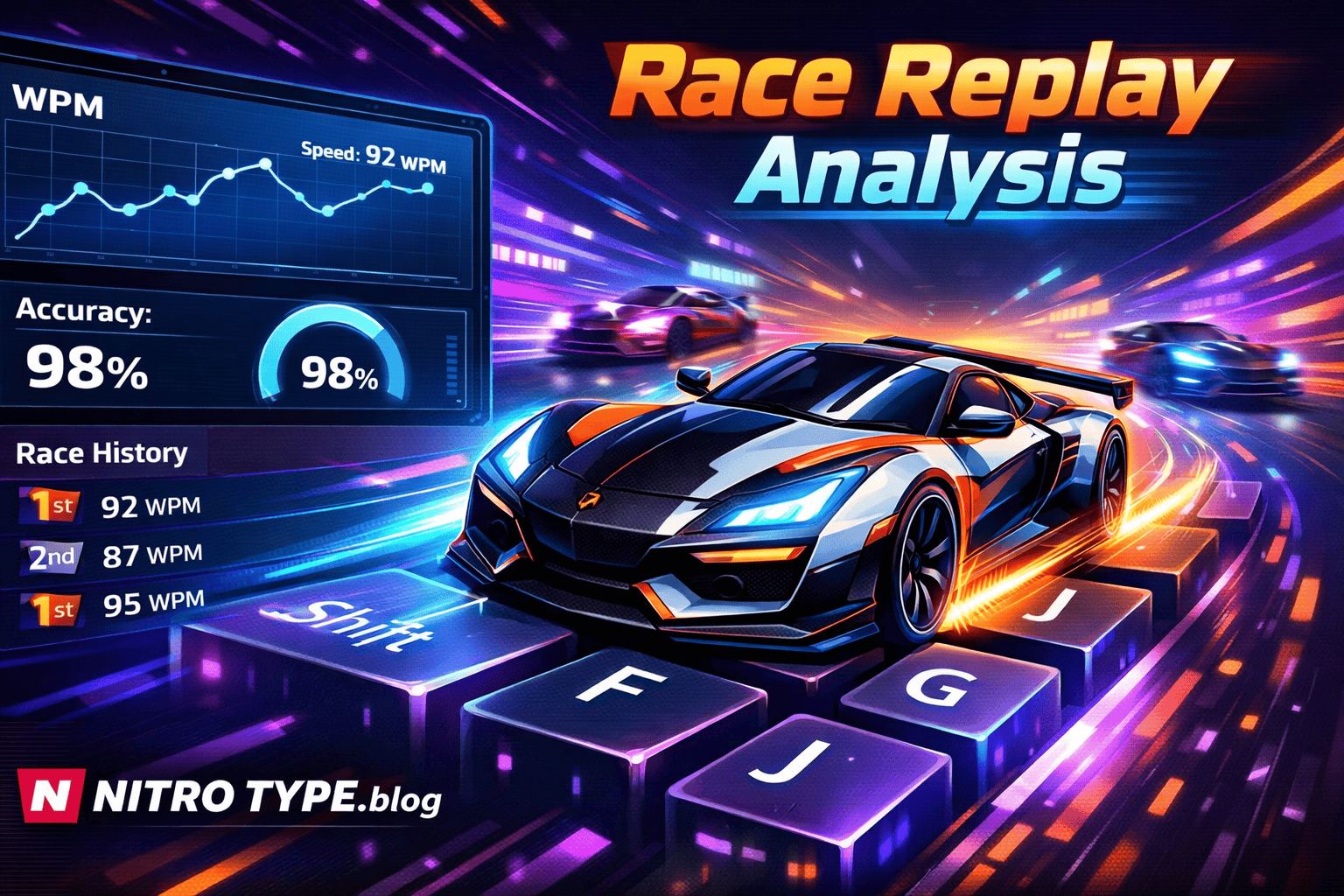
Nitro Type Race Replay Analysis 2026: How to Review Your Past Races to Improve WPM and Accuracy
Nitro Type racers often focus only on typing faster during races, but the biggest improvements usually happen after the race ends. The secret used by many experienced players is Nitro Type Race Replay Analysis 2026, a strategy that involves studying past races to understand typing patterns, mistakes, and performance trends.
Instead of guessing why your speed drops or accuracy fluctuates, analyzing your race history allows you to identify the exact factors affecting your performance. This method turns casual racing into a data-driven improvement system that steadily boosts both WPM and accuracy.
If you want to understand how performance metrics reveal hidden progress patterns, our detailed guide Nitro Type Stats Guide 2025 – Track, Analyze & Boost Your Racing Speed explains how racers track statistics to improve their results.
Table of Contents
What Is Nitro Type Race Replay Analysis and Why Does It Matter?
What does race replay analysis actually mean in Nitro Type?
It refers to reviewing your previous races to understand typing speed changes, accuracy issues, and common mistakes. By analyzing race history, players can detect patterns that affect performance and build strategies to improve future races.
Race replay analysis is essentially a performance review process for typists. Just like athletes watch recordings of their matches, Nitro Type racers study their past races to refine technique and correct weaknesses.
Through this process, players examine details such as:
- Words per minute (WPM)
- Accuracy percentage
- Typing rhythm
- Error frequency
- Consistency across races
All of this data becomes available through your race history on the official platform https://www.nitrotype.com/ where racers can monitor their progress and analyze past performance.
Without replay analysis, players often rely on random practice. But reviewing past races turns practice into a targeted learning strategy.
How Race Replay Analysis Improves WPM and Typing Accuracy
Why does reviewing past races improve typing performance?
Because replay analysis reveals hidden weaknesses that are impossible to notice during fast-paced races. By identifying slow sections, repeated mistakes, and hesitation patterns, racers can design practice sessions that directly address their weaknesses.
During a race, your focus is on speed. There is no time to analyze what went wrong. But when reviewing the race later, you can clearly see where performance dropped.
Some of the most common issues discovered during replay analysis include:
- hesitation before difficult words
- repeated spelling mistakes
- inconsistent typing rhythm
- slow recovery after errors
When these issues are identified, players can train specifically to eliminate them.
A key concept that often appears during race reviews is the relationship between speed and accuracy. Many racers type faster but make more mistakes, which ultimately slows them down.
To understand this balance better, explore Typing Speed vs Typing Accuracy: What Should Students Focus On in 2025? which explains why sustainable speed always depends on strong accuracy.
Step-by-Step Guide to Reviewing Your Nitro Type Race History
How should you actually analyze past races?
A structured review method helps racers extract meaningful insights instead of casually glancing at their results. Following a step-by-step analysis process ensures that every race review leads to measurable improvement.
Step 1: Identify Your Slowest Races
Begin by locating races where your WPM was significantly lower than your average.
Ask yourself questions like:
- Did I hesitate on specific words?
- Did accuracy drop?
- Did I lose rhythm in the middle of the race?
These slow races often reveal the exact weaknesses affecting your typing performance.
Step 2: Study Your Accuracy Patterns
Accuracy is one of the most important indicators of typing skill.
When reviewing races, check whether mistakes happen on:
- punctuation marks
- long words
- repeated letters
- uncommon key combinations
Identifying these patterns helps you design targeted drills that strengthen weak areas.
Step 3: Compare Your Best and Worst Races
Your fastest races reveal something important: your natural typing rhythm.
By comparing your best races with slower ones, you can discover:
- ideal typing speed
- optimal focus level
- consistent rhythm patterns
This comparison provides valuable insights into how you perform at your peak.
Common Mistakes Players Make During Race Analysis
Why do some players review races but still fail to improve?
Because they analyze the wrong information. Instead of studying typing patterns and mistakes, they focus only on race results or placement.
To make replay analysis effective, avoid these common mistakes.
Focusing Only on Winning or Losing
Winning a race does not always mean your typing performance was strong. Sometimes you win simply because opponents typed slower.
What truly matters during analysis is performance data, not finishing position.
Metrics like WPM, accuracy, and consistency reveal far more about your improvement potential.
Ignoring Error Recovery Patterns
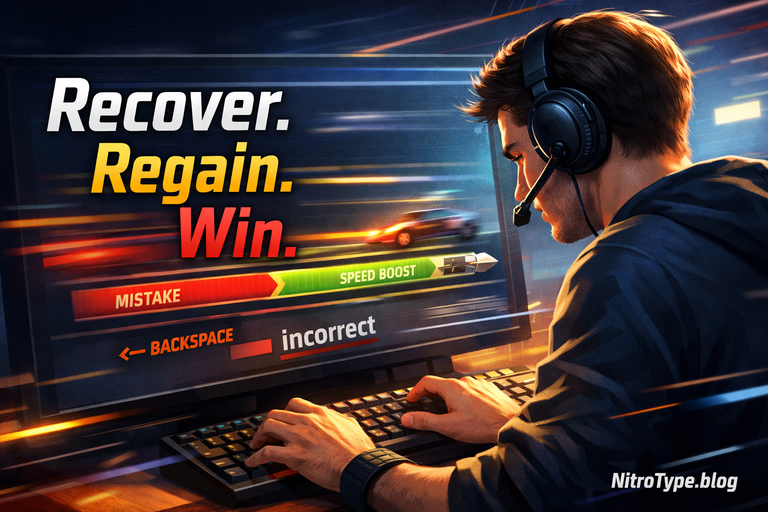
Another critical aspect of replay analysis is understanding how you recover from mistakes.
Some racers panic when they make errors, causing large speed drops. Others recover quickly and maintain momentum.
Learning effective error recovery techniques can dramatically improve race performance. Our guide Nitro Type Error Recovery Mechanics: How Top Racers Fix Mistakes Without Losing Momentum explains how elite racers correct mistakes while keeping their speed high.
Turning Race Replay Analysis Into a Weekly Improvement System
How can racers turn replay analysis into consistent progress?
The key is creating a regular review routine. Instead of analyzing races occasionally, successful players schedule time every week to review their performance data and identify improvement opportunities.
A simple weekly system might look like this:
Day 1–4: Regular Racing
Focus on normal races without worrying too much about analysis.
Your goal is to generate enough race data for review.
Day 5: Race Review Session
Spend time examining your race history.
Look for patterns such as:
- repeated typing mistakes
- slow word transitions
- accuracy fluctuations
Day 6: Targeted Practice
Practice the specific weaknesses discovered during your analysis.
For example:
- punctuation drills
- difficult word patterns
- accuracy-focused exercises
Day 7: Performance Test
Race again and compare results with previous performances.
Over time, this process creates a continuous improvement loop.
Advanced Race Replay Strategies Used by Elite Nitro Type Racers
How do top racers analyze their races differently from beginners?
Experienced players look beyond simple speed numbers. They analyze deeper elements such as typing rhythm, mental focus, and mistake recovery patterns.
These advanced insights help them maintain consistently high WPM across many races.
Typing Rhythm Analysis
Typing rhythm refers to the smooth, continuous flow of keystrokes during a race.
Elite racers maintain consistent rhythm by:
- avoiding unnecessary pauses
- maintaining focus
- minimizing hesitation
When rhythm breaks, speed immediately drops.
Race replay analysis helps identify where these rhythm disruptions occur.
Segment-Based Race Analysis
Some advanced racers divide each race into sections:
- beginning
- middle
- final segment
By reviewing these segments separately, they can determine where performance declines.
For example:
- slow starts due to lack of warm-up
- mid-race mistakes caused by fatigue
- rushed endings caused by pressure
This technique helps isolate performance problems with high precision.
Benefits and Limitations of Race Replay Analysis
Is replay analysis always beneficial?
While it is one of the most effective improvement methods, it should be used correctly. Understanding both advantages and limitations ensures racers gain maximum benefit.
Key Benefits
Race replay analysis provides several important advantages:
- deeper understanding of typing performance
- faster WPM improvement
- improved accuracy awareness
- better training strategies
- stronger long-term consistency
Because players can see exactly what went wrong in past races, they avoid repeating the same mistakes.
Possible Limitations
However, overanalyzing can sometimes slow progress.
Potential downsides include:
- spending too much time reviewing instead of practicing
- focusing too heavily on statistics
- becoming discouraged by minor mistakes
The goal of replay analysis is improvement, not perfection.
The Future of Performance Analytics in Typing Games
How might race analysis evolve in the future?
Typing games are gradually adopting smarter analytics and performance tracking systems. These innovations could make replay analysis even more powerful in the coming years.
Future developments may include:
- AI-powered typing coaches
- automatic mistake detection
- personalized training recommendations
- keystroke timing analysis
- advanced performance dashboards
These technologies could help racers identify weaknesses instantly and receive targeted improvement suggestions.
As typing games continue to evolve, performance analytics will likely become one of the most valuable tools for competitive racers.
Frequently Asked Questions
What is Nitro Type Race Replay Analysis?
Nitro Type Race Replay Analysis is the process of reviewing past races to identify typing mistakes, speed fluctuations, and accuracy patterns that affect performance.
How often should I review my Nitro Type races?
Most players benefit from reviewing their races once or twice per week. Regular reviews help identify patterns and track improvement.
Can replay analysis improve typing speed quickly?
Yes. By identifying specific weaknesses, replay analysis allows players to focus on targeted practice that improves speed faster than random typing practice.
What metrics should I focus on when reviewing races?
Important metrics include WPM, accuracy percentage, typing consistency, and error recovery speed.
Do professional Nitro Type racers review their race history?
Yes. Many experienced racers regularly review race history and performance statistics to refine their typing strategies.
Is replay analysis better than normal typing practice?
Replay analysis does not replace practice, but it makes practice far more effective by identifying exactly what needs improvement.
Final Thoughts
Nitro Type racing is not only about typing fast in the moment. The racers who consistently reach high WPM levels are those who take time to study their performance and learn from past races.
By using Nitro Type Race Replay Analysis 2026, players can transform every race into a learning opportunity. Instead of repeating the same mistakes, they gradually refine their typing technique, improve accuracy, and build stronger consistency.
Over time, this simple habit can turn average racers into confident, high-speed competitors who understand exactly how to improve their performance.

Hi, I’m Kamran Khatri, the author behind NitroType.blog. I share typing speed tips, Nitro Type updates, gaming tricks, and productivity hacks to help you type faster and smarter. My goal is to make typing fun while helping you improve your skills like a pro. If you’re passionate about typing or want to level up your Nitro Type game, you’re in the right place!